2021 - 2022
Product Design
UX Design
AMI
Empowering Data-Driven Decisions
Through Intuitive Risk Monitoring
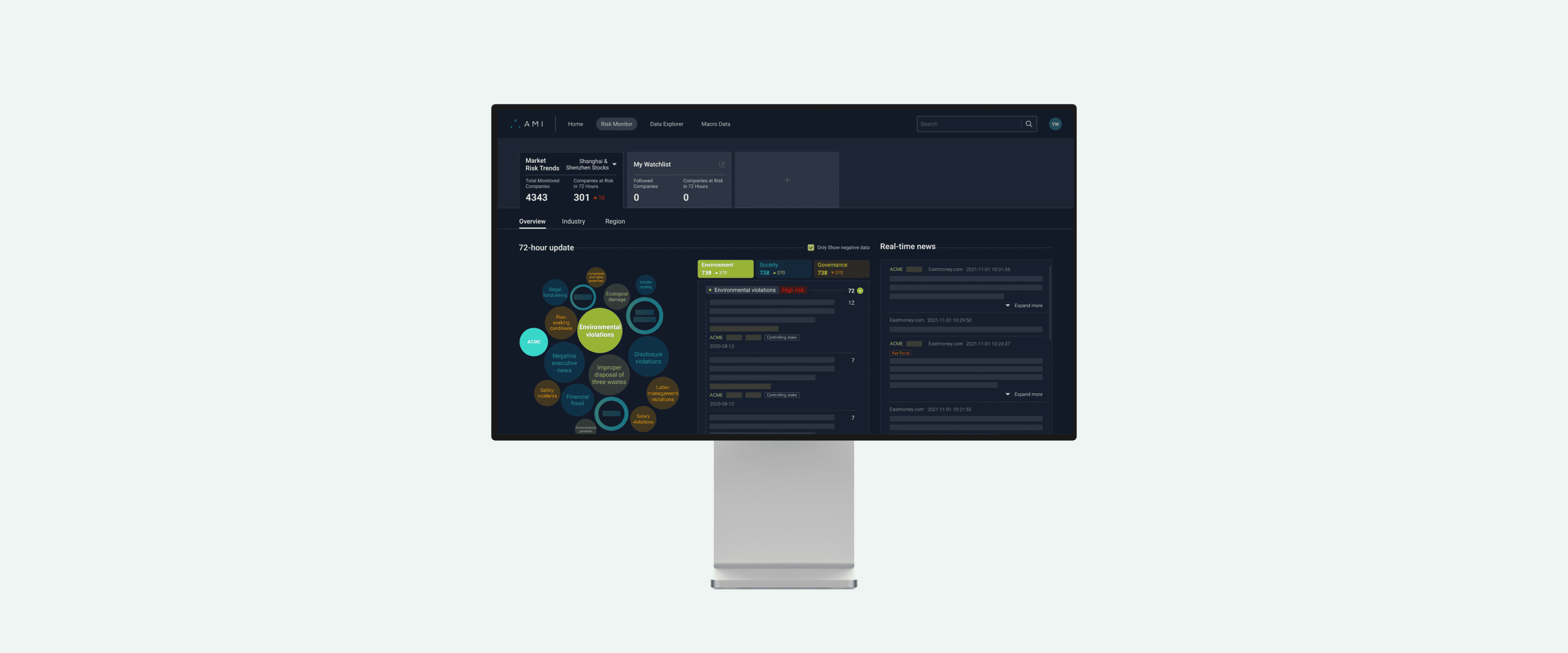
AMI is an ESG risk management platform built on high-quality ESG data from millions of enterprises. Risk Monitor, as one of the main features, enables users to monitor ESG risks in real time.
While contributing to various features across the AMI platform, I led the core revamp of the ESG Risk Monitor. I mainly focused on rethinking how to reduce interaction friction and ensure that critical ESG insights and trends are clearly delivered.
Company
MioTech
Product
Web App
My Role
Senior UX Designer
Context
The Challenge
The ESG Risk Monitor aggregates risks related to the broader market and user-defined watchlists. It provides monitoring through diverse perspectives, such as market overviews, industry distribution, and geographic distribution, based on detailed ESG indicators.
The original risk monitor passively listed massive ESG data, leading to high cognitive load and interaction friction for users when tracking risks and affected enterprises. The lack of intuitive information hierarchy and data guidance prevented the system from effectively delivering powerful insights.
Core solutions 01
Clearer Interaction Flow and
Information Architecture
Problem
The operation path of the original version was complex, and the switching and filtering of multi-dimensional data were not intuitive enough. This resulted in an excessive cognitive load for users, making it impossible for them to quickly find the required information within massive amounts of data.
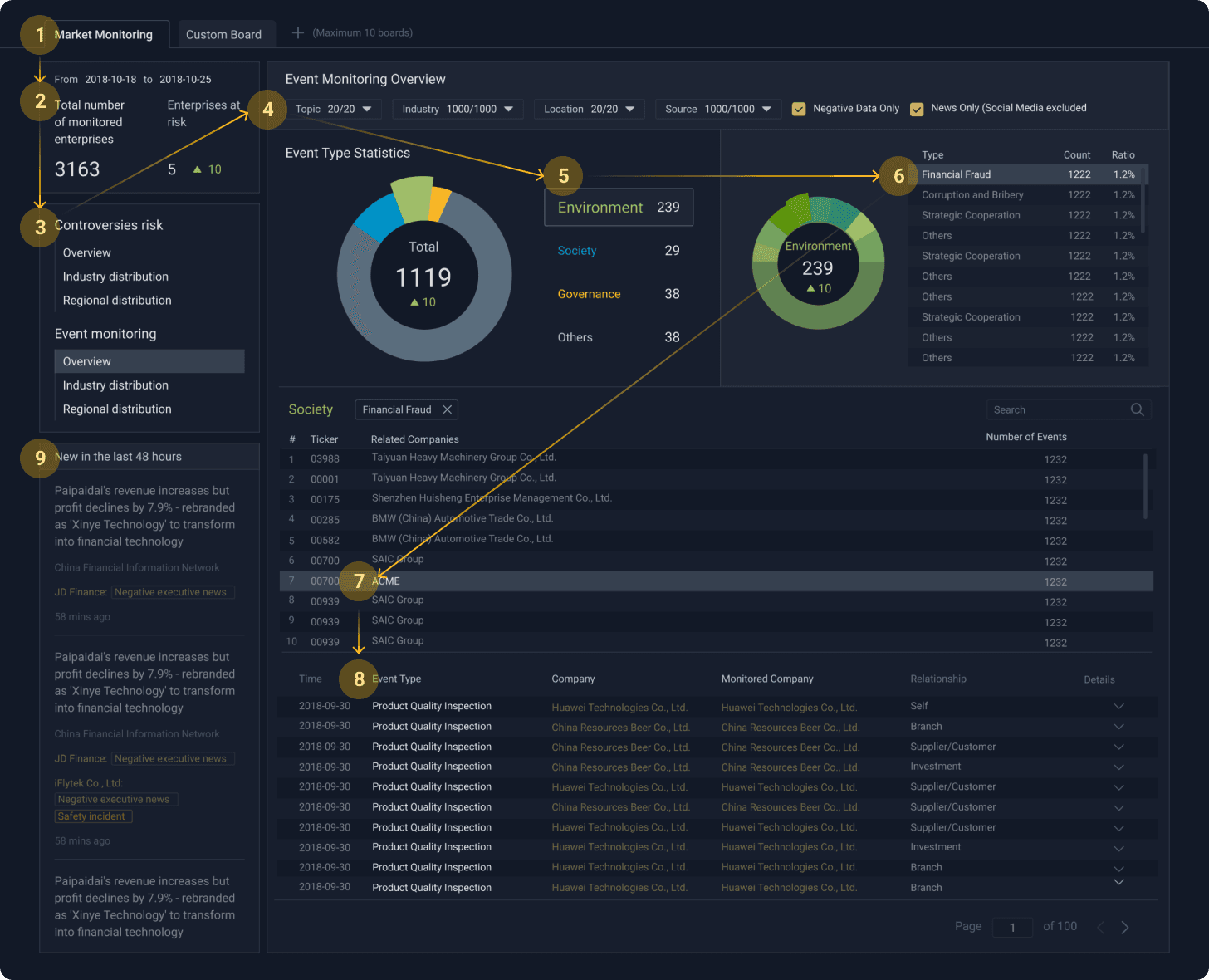
Original Version Interaction Flow
Step 1
Select Whole Market / My Watchlist
Step 2
View the data scope and concise summary
Step 3
Select to view Overview or Distribution type
Step 4
Select more filters
Step 5
Select Level 1 indicator
Step 6
Select Level 2 indicator
Step 7
Select the specific relevant company
Step 8
View the detailed information of the company
Step 9 (optional)
View the latest news within 48 hours
Page Information Architecture Breakdown
Boards
Provides view of multiple boards covering the entire market and also self-selected companies, which display with the risk summary of current board.
Data Drill-down
Enables data drill-down from high-level overviews to granular details. Users select specific indicator for drill-down and apply necessary filters to access the needed data.
Real-time News Updates
Provides the latest news updates and labels the associated event types.
Solutions
By introducing a modular layout and a progressive information disclosure strategy, I created an intuitive experience while maintaining high data density, ensuring users can receive the risk alerts immediately.
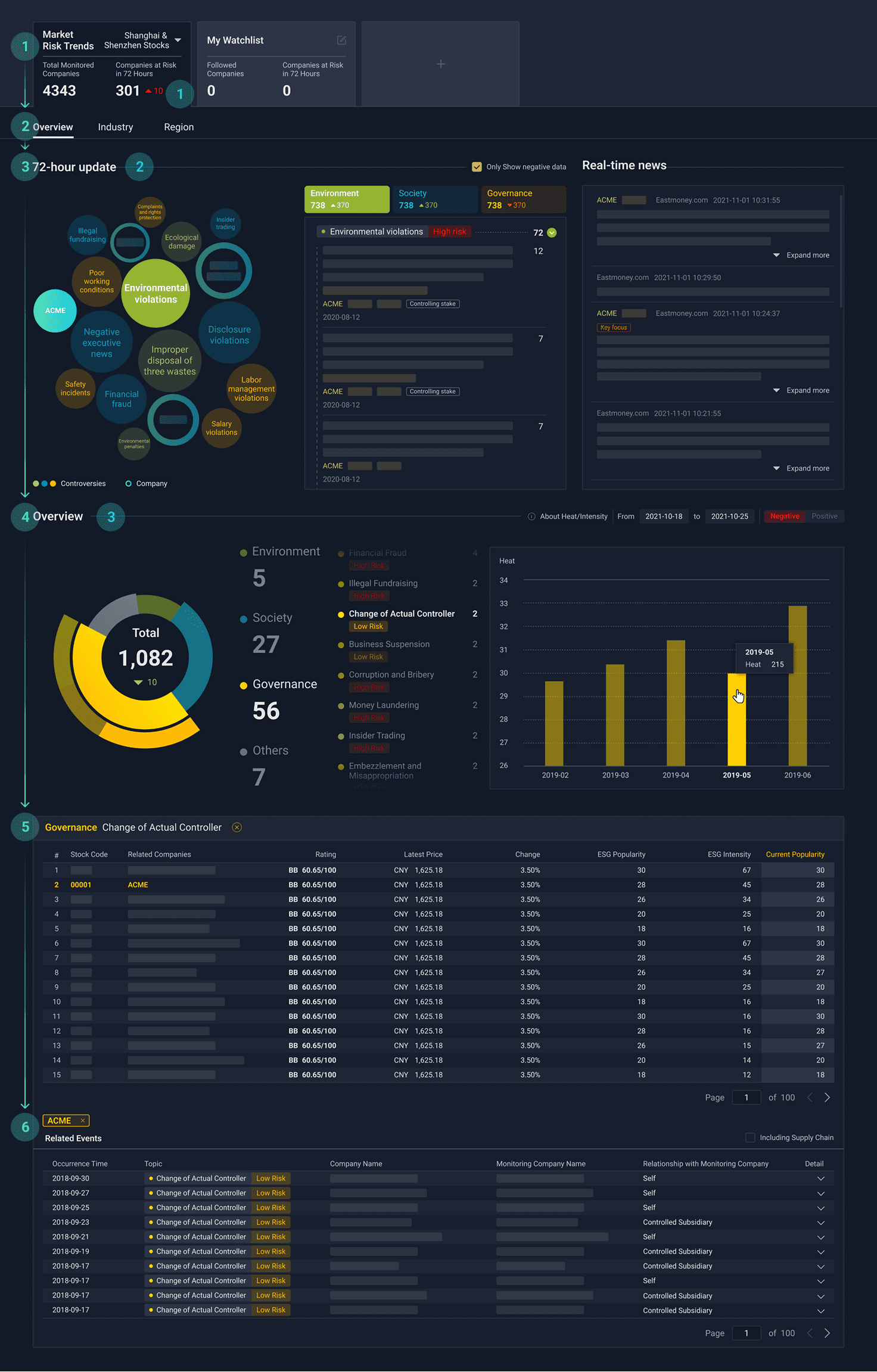
Interaction Flow
The information and interaction architecture have been redesigned into a linear downward flow. This aligns with natural reading habits and shortens the interaction path.
Information Integration
1
Info-based Dashboard Tab
Board risk summary is now integrated directly into the tabs, allowing users can get the overview of all the dashboards in a glance without having to switch tabs.
2
Top-level Real-time News
Real-time news is placed at the top of the dashboard to ensure timeliness. News is categorized by event type for easier browsing and supplemented with visual charts.
3
Nested Data Drill-down
The data drill-down area for granular indicators has been redesigned from two separate donut charts into a single nested (concentric) donut chart. This increases the correlation between multi-level indicators, making it easier for users to connect information and make selections.
Core solutions 02
Precise Information Delivery
Visual experience enhancement:
Transforming complex data into intuitive insights.
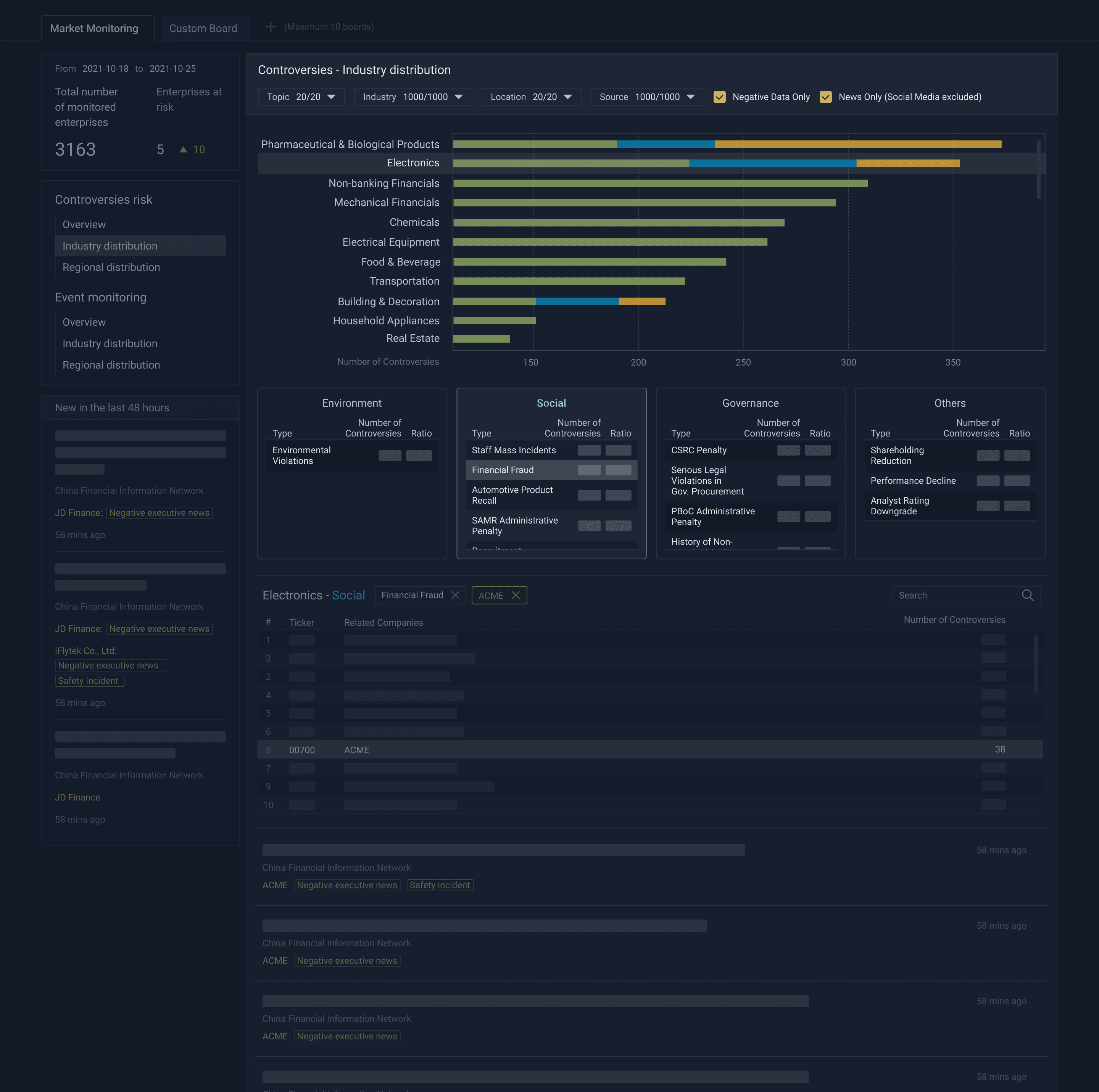
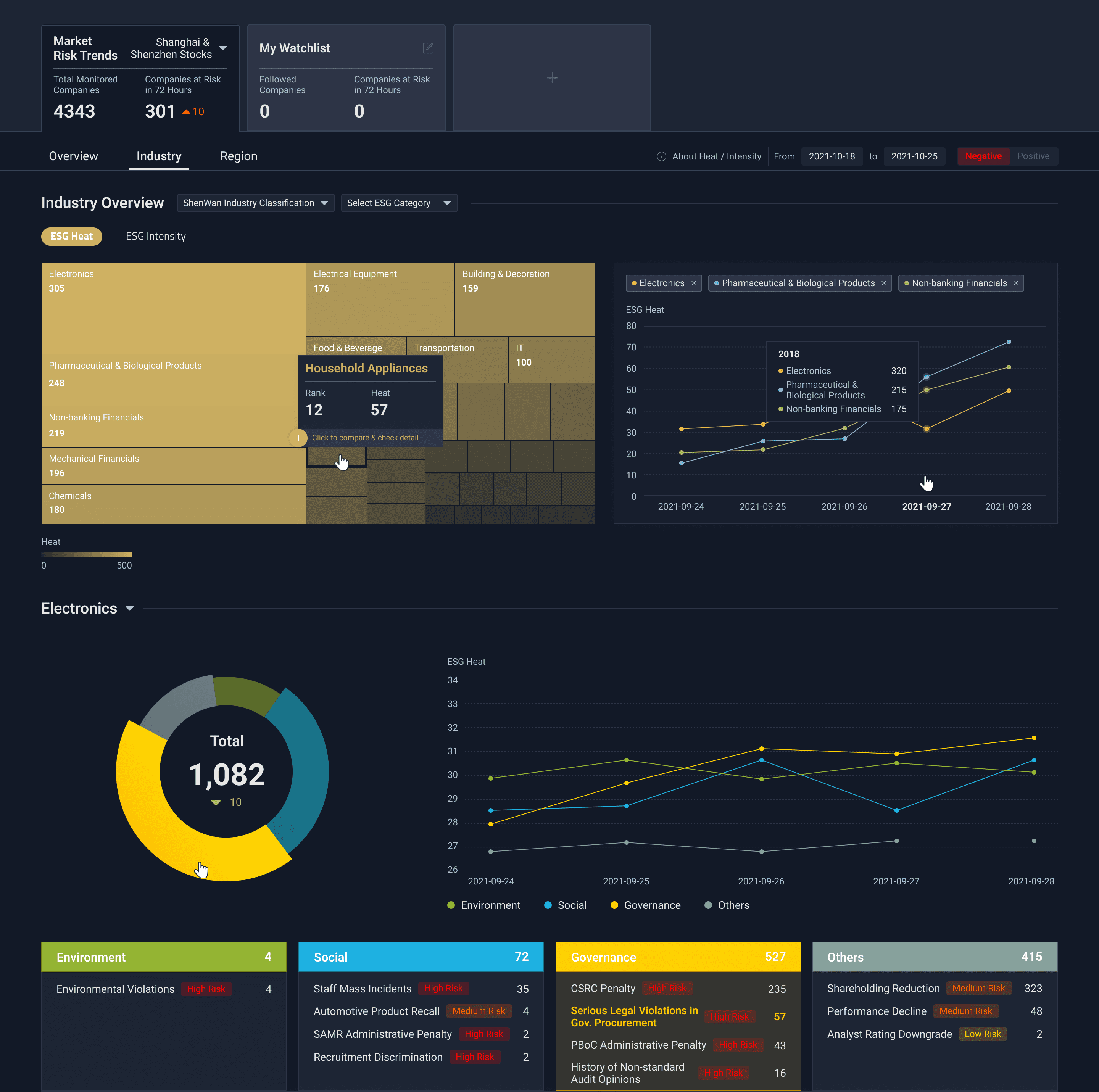
The primary information on the Industry Distribution page is the sentiment popularity (heat) across different industries. The original bar chart required scrolling within a restricted area, which made it impossible to get a comprehensive overview at a glance. I optimized this into a heat map distribution, allowing users to immediately identify the industries with the highest heat and compare heat levels across different sectors.
Additionally, I introduced donut charts for existing information structure, using consistent color-coding to establish clear correlations between related data points. By also adding time-trend charts to enrich the data structure, users can now capture more powerful insights in an instant.
Before
After
Enhancing Custom Board Precision and Boosting Engagement
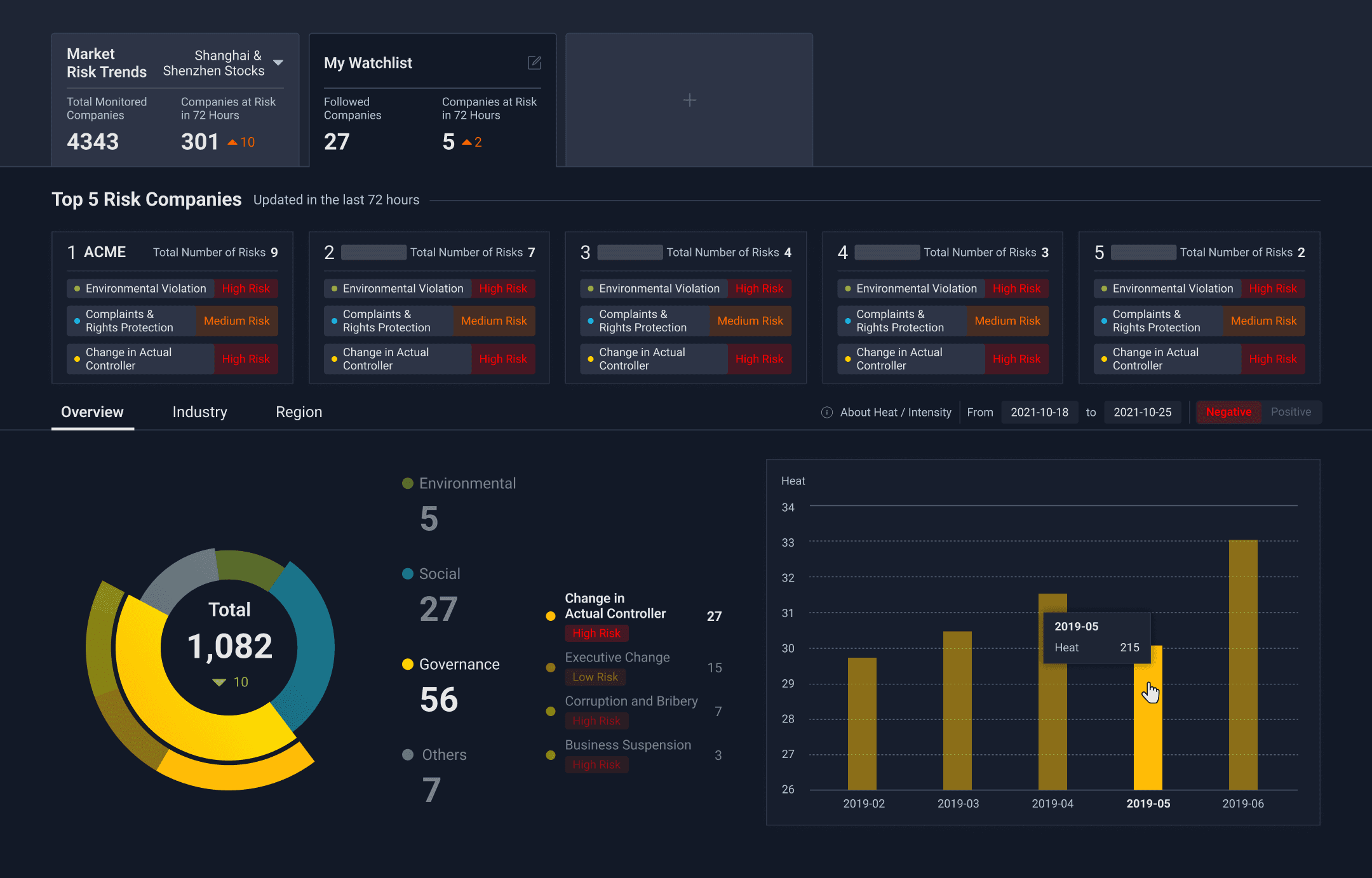
In the original version, the Custom Board utilized the same information architecture as the Whole Market board. User feedback indicated that this setup made it difficult to quickly spot anomalies at the individual company level.
To address this, we redesigned the top section of the Custom Board to feature the latest sentiment updates. We also introduced a summary of the Top 5 at-risk companies from the user's watchlist, detailing their specific risk counts and types. This approach rapidly highlights key insights, making data retrieval much smoother and more efficient.